The Easy Scones – for Slow, Companionable Mornings

When people ask me what my favorite thing to bake is, I often answer “scones”. This may be simply a way of dodging the pie vs. cake debate*, but it’s also true. I love scones. They’re easy, and delicious, and still manage to feel special. They can be dressed up for tea, or made simple for potluck breakfasts.

I have a few go-to scone recipes. This one is the easiest, and great for if you wake up tomorrow and want to make something for a easy breakfast nibble.**

Cream Scones (I)

  • 7.5 oz (1 1/2 c) flour
  • 2 1/2 tsp baking powder
  • 1/2 t salt
  • 1.75 oz (1/4 c) sugar
  • 2.5 oz (~1/2 c) dried fruit (chopped to raisin size or so)
  • 1 c heavy cream
  • 1/2 tsp vanilla (or some lemon zest)
  • milk or cream and coarse (or regular) sugar for garnish

Preheat oven to 375ºF. Whisk (or mix) the dry ingredients together, then add dried fruit. Add cream and vanilla together and stir with a spatula until just mixed. You should have a rough dough. Pat into a round disk, ~1/2 inch thick, and cut into eight (or twelve) wedges.*** Place wedges, evenly spaced on a parchment or silpat lined baking sheet. Brush tops with milk (or cream) and sprinkle lightly with sugar. Bake until golden. ~20 minutes.


* The answer to “pie vs. cake”, of course, is often “tart!”

**If you don’t happen to have any pie, that is. Leftover pie for breakfast is a wonderful tradition.

***I use a bench scraper for this if I have one, but knife or other handy straight edge will work fine.
A Poem About Pie

I am traveling and not baking (though I may bake some tomorrow), but for many US cooks, tonight is pie night. Tomorrow, after all, the oven is reserved for the turkey (and rolls and stuffing and …). This is for the late night pastry cooks and poets. It’s one of my favorite poems about pie, because sometimes it’s good to do a small, useful thing*.

Untitled – Grace Paley

I was going to write a poem
I made a pie instead it took
about the same amount of time
of course the pie was a final
draft a poem would have had some
distance to go days and weeks and
much crumpled paper
the pie already had a talking
tumbling audience among small
trucks and a fire engine on
the kitchen floor
everybody will like this pie
it will have apples and cranberries
dried apricots in it many friends
will say why in the world did you
make only one
this does not happen with poems
because of unreportable
sadnesses I decided to
settle this morning for a re-
sponsive eatership I do not
want to wait a week a year a
generation for the right
consumer to come along

*that last bit is a quote (also about pie-making) from the movie version of “A Home at the End of the World”.

Procrastinating via Shortbread

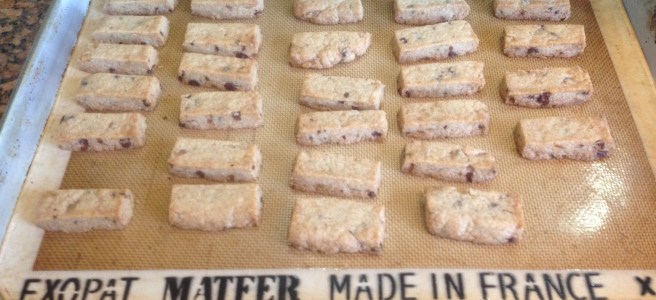
completed shortbread finger cookies on a baking sheet with silpat

My family is getting on a plane this evening, traveling to see two sets of loved ones for Thanksgiving. This means I’m currently putting off packing and thinking about airplane snacks. Therefore, shortbread!

Shortbread is one of my favorite spur of the moment things to bake. It’s simple. It’s forgiving. It’s delicious. I’ve fallen out of the habit recently, but baking shortbread was even a part of my wedding vows.

Here’s how I do it these days: 1-2-3 Shortbread – 1 part sugar, 2 parts fat, 3 parts flour.

  • 6 oz flour – can be pastry or AP or a blend including oat flour. add a bit of rice flour if you like your shortbread crisp.
  • 4 oz cold, unsalted butter
  • 2 oz sugar
  • 1/2 tsp salt
  • flavoring and additions such as today’s:
    • 1/2 t vanilla
    • 1/4 c baker’s cut candied ginger
    • 2 T chocolate coated cocoa nibs

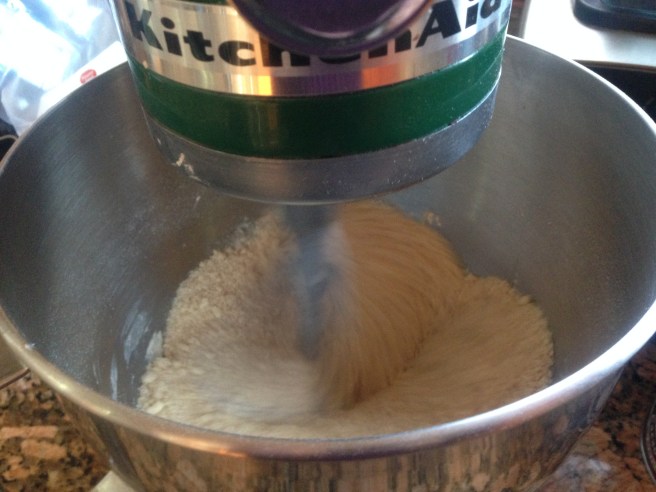
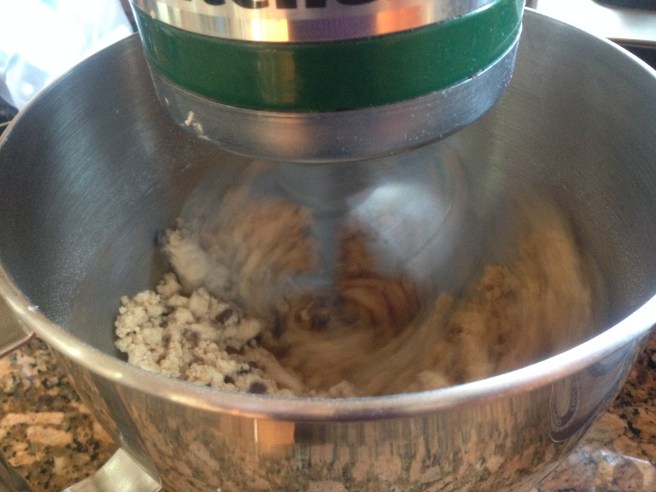
Blend flour, sugar, and salt in the bowl of a stand mixer*, fitted with the paddle attachment. Cut the butter into slices or cubes and add to the flour mixture. Mix on low until the dough begins to come together. This will take a long time, ~10 minutes**. You’ll see it progress from floury to sandy to pea sized clumps.

From this: sandy mix of flour and butter being mixed in a green kitchenaid mixer

To thisdough forming pea-sized clumps being mixed in green kitchenaid mixer

Once the dough begins to come together, add your flavorings and mix until well-incorporated.

Once the dough is blended, press it into a log (~2in diameter), or a rectangle or circle (~1/2 in thick), or shortbread molds if you have them and are feeling fancy, and chill for a bit in the refrigerator (30 minutes to… forever, more or less) either covered or wrapped in plastic wrap. Slice or cut into your desired shape and bake at 350ºF until done, just beginning to color at the edges, golden but not deep brown.

(Baking depends on the shape and thickness of your cookies. The fingers I just made took ~17 minutes.)


*yes, you really do want a stand mixer for this.

**this is why I said you’d really want a stand mixer

Different People Are Different (Food News)

One of my ongoing frustrations with many (all) diets and most food news relating to health issues is the prevailing attitude that there is an answer. I… don’t really believe this. Recently, apparently, there’s been a study that actually backs up this belief. You can read all about it in this Washington Post article. (Very short summary: different people respond differently to the same foods, so diets are best when individually tailored.) I really hope to see more of this sort of research in the future.

(I’d also love to see more research relating to the other factors in our lives which lead to different health outcomes – stress, happiness, environment, sleep, etc. – in combination with food studies. We’re complicated beings, after all.)

Cooked Cranberry Sauce

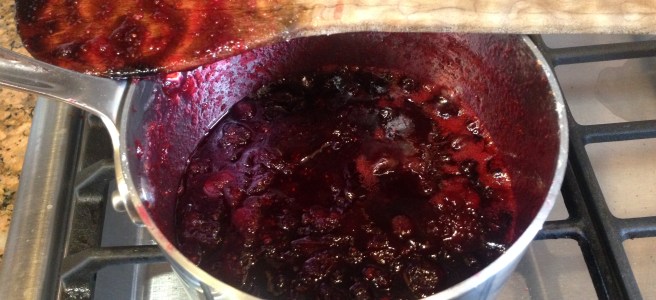
pot with cranberry sauce bubbling on stove with wooden spoon on top

I grew up on store-bought, canned cranberry sauce, the kind you sorta plunk out onto a plate and serve in slices. I love that stuff.

At some point, I decided to see how easy it was to make cranberry sauce myself. Turns out? It’s really easy. I’m certain there are many ways you can make it smoother, more nuanced, fancier, etc., but the basic recipe is: cook some cranberries with some sugar. More specifically, here’s what I just did:

Spiced Cranberry Sauce

  • 4 cups fresh cranberries, picked over and rinsed
  • 2 cups sugar*
  • zest of 3 tangerines (or 1 orange, or…)
  • 1 cinnamon stick
  • 3 cloves

Put everything in a sauce pan with a bit (1/2 cup or maybe less) of water and cook, stirring frequently, over medium heat until boiling. Reduce the heat and simmer until the cranberries mostly burst (or a bit longer if you like your cranberry sauce extra thick). Done.

Store in the refrigerator or can** like other fruit jams.

This yielded 3 and 1/2 cups. Would have been 4 if I’d cooked it down less.


*That’s 2 parts fruit, 1 part sugar, which just happens to be my standard jam ratio.

**I can mine, because I tend to travel for Thanksgiving and having it sealed makes that easier. This stuff will keep almost forever, though, so it’s not necessary unless you’ll be away from a refrigerator for a while or want a good seal.

Pizza Dough, Revisited Already

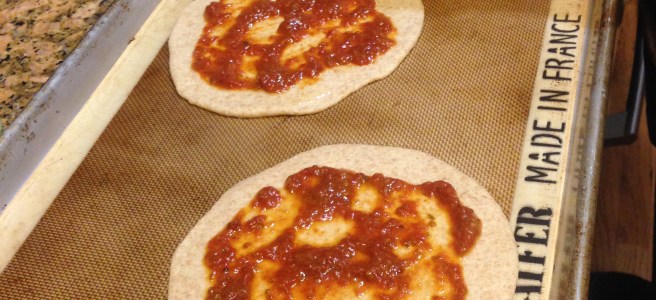
rounds of pizza dough spread with tomato sauce

So yesterday I told you how I make pizza dough, but I left out a few notes and sounded way to authoritative about some details. The most important note is: it doesn’t really matter! You can make homemade pizza crust out of just about any bread recipe. You can buy pizza dough in the freezer section of your grocery store. You can use par-baked pizza crusts. You can order delivery pizza. Just do have dinner. Dinner is a great idea.

The dough I usually make can be summed up as “60% hydration”. That’s actually how I remember it. Hydration refers to how much liquid you have in relation to flour. You may also see the term “Baker’s Percentage”. This is all a useful way to think about various bread doughs. Higher hydration is a really wet dough, harder to knead, prone to bigger holes, generally reserved for slow rise, rustic breads like sourdough. Lower hydration is for tighter crumb sandwich breads. The more you make bread, the better idea you’ll get of what sort of hydration you like for what. 60% gives me a really easy to handle dough which is great for make-your-own-pizza, especially when folks want to roll (or toss!) their own crust. A bit wetter or drier would also be fine.

1 tsp active dry yeast works well for about a pound of flour, when you want your dough to rise pretty quickly. Less would make for a slower rise. More could be even quicker. Eventually, you’ll taste too much yeast, however, so don’t go overboard unless you really like the taste of yeast. (On the other end of the spectrum, if you have sourdough starter and more time, you can make overnight dough instead.)

The olive oil I use is actually more like a “glug” than an ounce. I weighed my usual glug and it’s about an ounce, but the precision really doesn’t matter. I find a bit of olive oil makes the dough just a bit more pizza-y, while acknowledging that this is nowhere near traditional pizza dough at all.

Always add salt. This one is a rule. Saltless bread (or pizza or flat bread or…) is a sad, sad thing. The 2 tsp bit in my recipe is approximate though. A bit less or more would be fine. Oh, and also don’t add the salt right on top of your yeast. Yeast likes its salt a bit buffered, so add the salt late, or well mixed with the flour.

Rising times are extremely forgiving for a simple, yeasted dough. An hour or two on the counter works. Just throwing it in the fridge (covered) works. Taking it out a hour before baking is a good idea, but you can probably get away with skipping that too.

Baking time and temperature are also pretty flexible. Lower temp? Bake a bit longer. Higher? Shorter. Check it after ~8 minutes and see.

Oh, and lastly? Put whatever you want on top. Tomato sauce and pepperoni is great! So is olive oil, mozzarella cheese, and mushrooms. So is sliced apple, cheddar, and sage. So is…

Experimenting is awesome.


Pizza Fridays (the Dough)

three rounds of pizza dough showing between two silpats

Family meal planning (really any meal planning) is a heck of a lot easier with recurring parameters. We’ve been doing Taco Tuesday almost every Tuesday since we saw the Lego Movie*. We’re trying to do Meatless Mondays more regularly. Friday? Friday is Pizza Night.

I picked up the habit of pizza night from my sister, whose household has a regular pizza and movie night. The beauty of pizza night is it can be as simple as getting delivery pizza and eating it out of the box and it is easily adapted to the “choose your own adventure” model of family dinner.

When I have time, we do make your own pizza on a simple homemade crust. This isn’t three-day, naturally leavened, meant for a wood-burning oven in Rome, crust. It’s more let’s maybe eat some whole grains and mostly everyone likes it just fine crust. And most Friday’s that’s just fine.

Pizza Dough

  • 10 oz white bread flour
  • 10 oz spelt or other whole wheat flour
  • 12 oz water, divided
  • 1 oz olive oil
  • 1 tsp active dry yeast
  • 2 tsp salt

At least 2 and 1/2 hours before dinner – Combine the yeast with 4oz of (body temp or cooler) water. Mix flours, yeast, remaining water, and olive oil until they form a rough dough. Add salt and knead for ~5 minutes. (I use my stand mizer with the dough hook, on low.) Let rise in the bowl for 60-90 minutes.

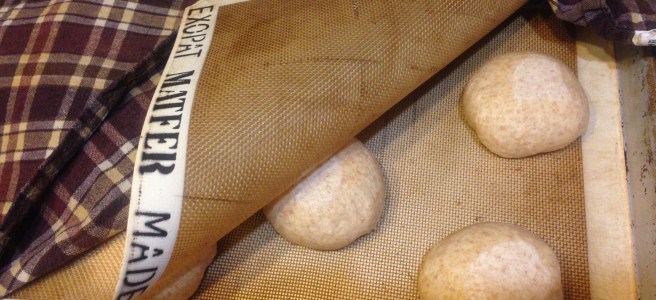
When the dough has roughly doubled (about an hour), punch it down and divide into six or eight equal(ish) size pieces. Form each piece into a ball. If it’s over an hour until you want to bake, put the dough, loosely covered, in the fridge. (I usually space them out on a half sheet pan, on a silpat, which I cover with another silpat and a towel. Lightly oiled plastic wrap over the top also works well.)

About an hour before baking, have your dough balls on the counter, still loosely covered, so they can rise slightly and come to room temperature. Just before baking, form each into more-or-less a flat circle, about 1/4 in thick. Coat with a bit of olive oil, then add sauce and toppings of your choice.

Bake assembled pizzas at 475ºF for about 12 minutes.


*Taco Tuesday, er, Freedom Friday

Adventures in Gardening, Habanero Salt

a handful of habaneros pepper

I’m a pretty lazy gardener. I plant things that sound good, and then I hope (and do a little weeding and pruning, but often not much). The next year, I try to remember what worked and plant those things again. One of the plants that consistently thrives in my front yard beds, is Habanero Pepper. (Also Jalapeños and Serranos. Not any kind of sweet peppers though, those always struggle. Poor sweet peppers.) For the third year in a row, I’ve had a great crop of Habaneros, the last of which are still waiting to be dried or otherwise saved to bring heat to our cold winter.

For the last three years, I’ve used some of the Habaneros to make fresh Habanero Salt.

  • one small handful (8 to 12) habaneros
  • 1/2 cup coarse sea salt
  • 8 0z (or more) “finishing” flaky sea salt, usually Maldon
  • gloves, food processor, spatula, glass quart container

Stem the Habaneros and pulse them with the 1/2 cup coarse salt in the food processor until finely minced. You probably want to be wearing gloves. Also, don’t inhale too deeply. Scrape the minced pepper and salt into a glass quart container. Add remaining finishing salt, then (securely) put on the lid and shake until combined.

Shake periodically over the next few days. If liquid collects at the bottom of the container, add more finishing salt. The salt is done when you know longer see liquid collecting at the bottom of the container.

Divide into smaller containers (you might want gloves again) and share with your spice loving friends.

Put Habanero salt on anything you might add a fruity hot sauce to. Sprinkle on boring salads. Add to brownies if you’re feeling crazy. Enjoy!