Cookbook Club!

I feel I should be upfront here, and admit that I know I’m a few weeks behind in posting (according to my goal of posting once a week). You see I was gonna post about a dinner party, but then that didn’t happen*, and then I was gonna post a brownie recipe, but I’m still refining it,* and I was gonna post about the kitchen cure in January project, but I haven’t finished that either. Oh and I also still need to post the third scones recipe (and scones rambling) and that cool cheddar corn coins thing. Bother. So here I am, vowing to break the inertia and get back to posting. This will probably happen again.

That’s not what I was going to tell you about this week, however. This week I want to tell you about Cookbook Club! Late last year, I read this article on Serious Eats about cookbook clubs and started thinking. I got a handful of virtual raised hands from other local folks who would also be interested in such a thing and lo and behold, we actually started one.

(People cooked! It was great!)

Here’s the basic premise:

  • Select a cookbook (which we did via nominating and voting on Google Sheets)
  • Select a date and time
  • Everyone gets or borrows a copy of the cookbook and makes one dish from it
  • There’s a casual potluck at which everyone can try dishes, talk about the book, and generally have a good time
  • Do it again the next month

Here are some things that made it work well:

  • Everyone could decide their own comfort spot of what to cook. More experienced cooks choose something that would push their edges a little, or vowed to actually follow a recipe where we would generally riff on the idea but disregard the instructions. Less experienced cooks choose something more approachable and pushed the edge of “making things for a crowd of cook-type-people”. Those with more time used it; those with less time choose according to that limit.
  • It was a social gathering with a pre-built conversation starter. This, for the introverted and/or socially anxious among us, was awesome.
  • We kept it casual***. There was no pressure to have a dish perfectly plated or piping hot which greatly simplified logistics.
  • Rotating hosts. Next month is at someone else’s house. This takes the pressure off starting the whole thing in motion.

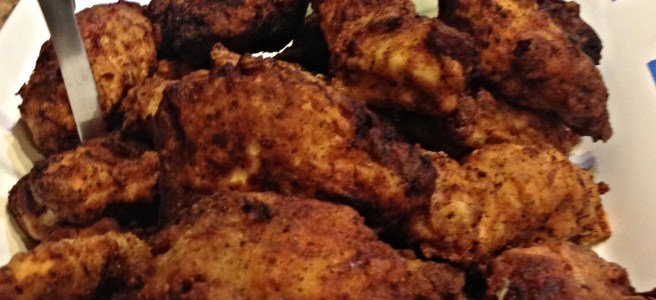
January’s book was Heartlandia, and I made fried chicken for the first time ever****. I probably won’t follow that exact recipe again; nevertheless, here’s what I learned:

  • Boneless chicken makes for a much easier eating experience and is totally worth it
  • Brining (2 days in advance) and buttermilk soaking (1 day in advance) the chicken yielded super moist and delicious chicken even for the pieces I overcooked
  • Shaking chicken in a paper bag to coat with seasoned flour will cause clouds of seasoned flour to drift down over a very large radius (and I probably won’t do that again)
  • Frying in a skillet works
  • Beef tallow makes for yummy fried things
  • I can fry chicken!*****

Next month, I’m making fresh pasta from Plenty, even though I habitually leave the pasta making to my spouse, and I can’t wait to taste what everyone else makes!


*The party did happen. It’s just the post that got lost in the sands of time. You all should definitely make Romesco though. It was so so good.

**Perils of food blogging! So many brownies! You have no idea!

***We kinda had to. We didn’t have enough chairs.

****Having grown up on Shake and Bake

*****Win!
Almost Awesome Rolls for Christmas Dinner

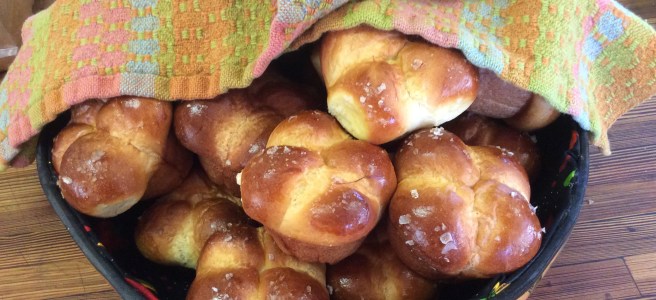
a bowl of rolls with course salt on top covered with a colorful towel

It’s possible I had overly ambitious plans for Christmas Dinner, considering we were traveling cross-country the day before, but it seemed perfectly reasonable at the time: rolls, stuffing, turkey, potatoes, the other things taken care of by other people. It’s also possible I should have chosen a roll recipe that I’d made before. It’s possible I should have drunk my coffee and then started the rolls.* I didn’t though, and thus I made what were beautiful, almost awesome rolls for my mothers-in-law & family for Christmas dinner. Almost awesome even though I forgot the salt.**

Professional kitchen ethos: “Don’t serve anything you’re not proud of.”***

Home dinner party ethos: “Never apologize, never explain.”****

After crying a bit on my spouse’s shoulder over the lost opportunity of making really delicious rolls for Christmas, I went with the second guideline and served the rolls anyway. Next time! they’ll be even better.

Kindred’s Milk Bread Rolls, slightly adapted from Food52

Makes 24-30 rolls

  • 5 1/3 cups bread flour, divided
  • cup heavy cream
  • 1/3 cup mild honey 
  • 3 T nonfat dry milk powder 
  • 2 T active dry yeast 
  • 2 T kosher salt (don’t forget it!!)
  • large eggs, divided
  • 4 T (1/2 stick) unsalted butter, cut into pieces, at room temperature, plus more for coating the pans
  • Flaky sea salt 
  1. Cook 1/3 cup flour and 1 cup water in a small saucepan over medium heat, whisking constantly, until a thick paste forms (almost like a roux but looser), about 5 minutes. Add cream and honey and cook, whisking to blend, until honey dissolves.
  2. Transfer mixture to the bowl of a stand mixer fitted with a dough hook and add milk powder, yeast, kosher salt, 2 eggs, and 5 remaining cups flour. Knead on medium speed until dough is smooth, about 5 minutes. Add butter, a piece at a time, fully incorporating into dough before adding the next piece, until dough is smooth, shiny, and elastic, about 4 minutes.

  3. Form into a smooth ball and leave in the mixer bowl. Cover with plastic wrap and let rise in a warm, draft-free place until doubled in size, about 1 hour.
  4. Butter 24 muffin tins. Turn out dough and divide into 6 pieces. Roll each piece into a cylinder, approximately 1 inch in diameter, and cut into 1 inch sections. They don’t need to be exact. Form each section into a ball and place 4 pieces of dough side-by-side in each muffin cup.
 If you have extra dough and extra muffin tins, make more rolls. If not, just free-form the rest and use them to taste test.
  5. Let shaped dough rise in a warm, draft-free place until doubled in size (dough should be just puffing over top of pan), about 1 hour.
  6. Preheat oven to 375° F. Beat remaining egg with 1 teaspoon. water in a small bowl to blend. Brush top of dough with egg wash and sprinkle with sea salt, if desired. Bake, rotating pan halfway through, until bread is deep golden brown, starting to pull away from the sides of the pan, and is baked through, 17 to 20 minutes for rolls. Let cool slightly in pan on a wire rack before turning out. Serve with a smile.


* The moment when I had both my coffee cup and a cup of flour next to the kneading mixer and, instead of adding a bit more flour when the dough was sticky, I poured in some of my coffee was a good indicator that I wasn’t yet at my Christmas Day best.

** Dear self, you know this one – always, always taste your dough.

*** Quote from Duskie Estes, for whom I had the privilege of working, once upon a time. This idea is also covered really well in what I think of as “the chef speech” in Chef, the movie. I love that movie.

**** Quote which a dear friend of mine attributes to Julia Child (and gently reminds me of every time I apologize at a dinner party). The internet now tells me the actual Julia Child quote is “No matter what happens in the kitchen, never apologize.” That works too.


Pizza Dough, Revisited Already

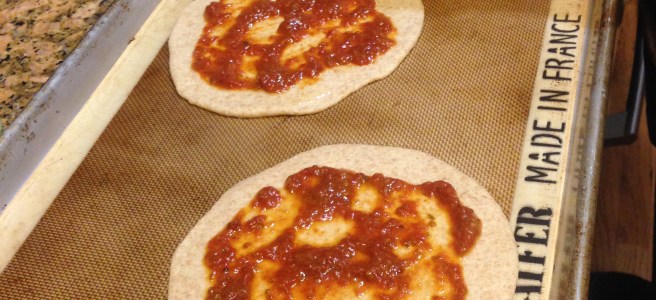
rounds of pizza dough spread with tomato sauce

So yesterday I told you how I make pizza dough, but I left out a few notes and sounded way to authoritative about some details. The most important note is: it doesn’t really matter! You can make homemade pizza crust out of just about any bread recipe. You can buy pizza dough in the freezer section of your grocery store. You can use par-baked pizza crusts. You can order delivery pizza. Just do have dinner. Dinner is a great idea.

The dough I usually make can be summed up as “60% hydration”. That’s actually how I remember it. Hydration refers to how much liquid you have in relation to flour. You may also see the term “Baker’s Percentage”. This is all a useful way to think about various bread doughs. Higher hydration is a really wet dough, harder to knead, prone to bigger holes, generally reserved for slow rise, rustic breads like sourdough. Lower hydration is for tighter crumb sandwich breads. The more you make bread, the better idea you’ll get of what sort of hydration you like for what. 60% gives me a really easy to handle dough which is great for make-your-own-pizza, especially when folks want to roll (or toss!) their own crust. A bit wetter or drier would also be fine.

1 tsp active dry yeast works well for about a pound of flour, when you want your dough to rise pretty quickly. Less would make for a slower rise. More could be even quicker. Eventually, you’ll taste too much yeast, however, so don’t go overboard unless you really like the taste of yeast. (On the other end of the spectrum, if you have sourdough starter and more time, you can make overnight dough instead.)

The olive oil I use is actually more like a “glug” than an ounce. I weighed my usual glug and it’s about an ounce, but the precision really doesn’t matter. I find a bit of olive oil makes the dough just a bit more pizza-y, while acknowledging that this is nowhere near traditional pizza dough at all.

Always add salt. This one is a rule. Saltless bread (or pizza or flat bread or…) is a sad, sad thing. The 2 tsp bit in my recipe is approximate though. A bit less or more would be fine. Oh, and also don’t add the salt right on top of your yeast. Yeast likes its salt a bit buffered, so add the salt late, or well mixed with the flour.

Rising times are extremely forgiving for a simple, yeasted dough. An hour or two on the counter works. Just throwing it in the fridge (covered) works. Taking it out a hour before baking is a good idea, but you can probably get away with skipping that too.

Baking time and temperature are also pretty flexible. Lower temp? Bake a bit longer. Higher? Shorter. Check it after ~8 minutes and see.

Oh, and lastly? Put whatever you want on top. Tomato sauce and pepperoni is great! So is olive oil, mozzarella cheese, and mushrooms. So is sliced apple, cheddar, and sage. So is…

Experimenting is awesome.


Recipes and Noncompliance (Pumpkin Bread)

loaf of pumpkin bread on a wooden cutting board

It often goes something like this:

I have some leftover pumpkin puree in the fridge which I want to use before it goes bad. I’m feeling uninspired by soup. I find, and then lose, an intriguing recipe for pumpkin spice cupcakes. (Younger kid’s reaction was “Can you leave out the spice?” when I was hoping for “Yay! Cupcakes with cream cheese frosting!” So my initial cupcake enthusiasm dimmed.) I decide to make pumpkin bread.

I do a quick search for online pumpkin bread recipes, reject one for having too many things, and choose another. (This one, this time: https://food52.com/recipes/8141-pumpkin-christmas-bread.) I skim it, preheat the oven, and start throwing ingredients together.

I don’t want to use white flour. I start to substitute half oat and then worry that’ll be too dense and stop at one third oat. I use whole spelt flour for the rest.

I think about subbing in coconut sugar for brown sugar, but don’t do it.

I think maybe 1 tsp baking soda is too much, but decide that pumpkin is probably acidic to handle it. (I have no idea if this is actually true.)

1/2 tsp cloves! Really? That’s a lot of cloves. 1/4 tsp.

Hey look ginger! That’s good with pumpkin. Add 1/2 tsp ginger.

Why is there no salt in this recipe? I hate when sweet recipes decide they don’t need salt! 1/2 tsp salt. Nyah. 1 tsp salt.

OK. Time to add the oil and pumpkin. (I’m dumping everything in the same bowl using a scale.) Oil. Check. Oh, oops, I don’t actually *have* 10 ounces of pumpkin. I have 9. It’s all already in the bowl, but I worry it’ll be too dry without that final ounce. I add a grated apple (which was in the other recipe, the one I read and rejected).

Bake. Hope.

Results: Not bad. Good with soft butter. I like the ginger. Could use less baking soda (maybe 3/4t). Also more oven time (was 1hr 20m – still extra moist).

Usually, that’s where it ends. I fail to take notes, forget which recipe I started with, and start all over again next time I have too much pumpkin. This time I actually wrote it down and the kids kept asking for pumpkin bread, so I kept iterating.

2nd version:
all spelt
3/4 tsp baking soda
*scant* 1/4 tsp cloves
1/2 tsp salt
1/2 tsp ginger

Results: good, but crumbly – try eggs?
also maybe reduce sugar

Pumpkin Bread, Current version:

  • 1 2/3 cups spelt flour (or whole wheat or …)
  • 1/3 cup light brown sugar
  • 2/3 cup granulated sugar
  • 3/4 tsp baking soda
  • 1/4 tsp ground cloves
  • 1/2 tsp ground ginger
  • tsp ground cinnamon
  • 1/2 tsp ground nutmeg
  • 1/2 tsp sea salt
  • 1/3 cup vegetable oil
  • 10 oz pumpkin puree (or other squash)
  • 2 eggs

Preheat oven to 325ºF. Oil a large (1.5 lb) loaf pan. Mix dry ingredients. Mix wet ingredients separately. Combine until uniform, but don’t overmix. Pour/spread in loaf pan. (It’ll be thick!) Bake ~65 minutes.

Results: Pretty good. Slices without crumbling. Still noticeably sweet, but a little less so. I may even leave it this way next time.

Market Mornings, Roaming Kid

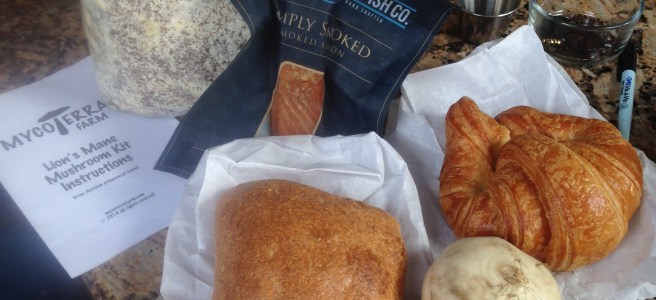
picture of pastries, turnips, salmon and mushroom growing kit

My 7 year old and I have a new routine. For the past few weeks, we’ve gone to the local Farmers’ Market together, then to the café, every Saturday morning.

I’ve been trying to get my kids to enjoy going to the market with me for years. In California, land of grandmothers*, free samples, and pozole, they go happily. In Massachusetts, where it’s just Mom buying vegetables and occasionally relenting on chocolate or popsicles, it’s not as appealing. I finally discovered the secret formula, however – I get market tokens (which work as cash, but only at the market), hand some over to my kid, and let him roam independently. He finally loves it.

There’s one rule**: no sweets. It is amazing to me how well this works. He has happily come back to our rendezvous point with carrots, mushrooms, eggs, a decorative gourd, discount apples, and more. This week’s haul was a croissant, a ciabatta roll, a mushroom growing kit (specially budgeted for after he found out its price last week), smoked salmon, and two turnips. NB: He won’t actually eat the turnips; those he picked out for me. I am still charmed.

This is, for the record, a kid who is pretty darn choosy and restrictive about what he eats, a kid who has marked reticence regarding talking with strangers and trying new things. He politely waits in line, inquires about prices, and delights in his finds. He also ate smoked salmon for lunch. It’s great.

It may not last long, but I’m appreciating the heck out of it while it works, and tomorrow he said he’d help make potato/turnip pancakes, even if he doesn’t want to actually eat them.


*Two of their grandmothers that is. They also have grandmothers in Indiana and Oregon.

**One rule re: buying things that is, general rules such as do not run people over with your scooter and ask before petting someone’s dog also apply.

Talking About Cows with Kids

Recently we were on a lovely, Halloween candy detoxing, ramble through the local woods when the conversation turned to pollution and greenhouse gases. My eight-year-old chimed in with the sober, mostly accurate news that cows burp methane, a greenhouse gas, at alarming rates. Yep, they sure do, I agreed, though I don’t know if your numbers are exactly accurate and there are many factors to consider regarding meat.

I talked some about what I do, which is try to source our meat as carefully as possible, from farmers I feel are doing their best for their land and their animals, and to try to eat nose-to-tail, and then we talked about what more we could do. He suggested if we have salad with every meal we might eat less meat. I brought up meatless Mondays. The truth is neither of us (or anyone else in the household) wants to give up meat altogether. I’ve learned, through trying many different ways of eating, that eating meat makes my body and brain feel better than being vegetarian or vegan, despite knowing something about nutrition and how to prepare a good vegetarian diet. I also have a younger child who already limits what he’ll eat to relatively few things; eliminating chicken and ham would take out major protein sources, eliminating milk would be a huge nutritional blow. In the end, we didn’t come to any conclusions.

Honestly, I don’t know what to do about this question. I want my family to eat delicious, nurturing food. I want to live responsibly in the world. I’m a car driving American who is very fond of good steak, living in a place where it’s much much easier to make a good salad in July than it is in November. I have a kid who would gladly live solely on bread, butter, and milk if I let him and will rarely try something new. (I have another kid who is an adventurous eater, for which I am grateful, but I still have to feed both of them.) I think about this, a lot. I also, sometimes, just feed my family hotdogs and boxed mac and cheese.

A Bit of a Manifesto

I resist online food writing for a variety of reasons: laziness, fear of inadequacy, actual inadequacy. I also resist because I’m no fan of following (or testing) recipes and because, well, I don’t believe there are real answers to anything; whatever I think today, I may just change my mind tomorrow.

That said, I am creating this space to write about food, and, with luck, to read what you, my mysterious yet possible audience, think about food, because food is one of my favorite things. You won’t find many painstaking recipes here. I hope you’ll find instead something to ponder and, perhaps, some inspiration.

That said, here are some things I think today, and will probably think tomorrow, about food & cooking:

Food connects. If I trace dinner far enough back, I find myself contemplating soil organisms and what feeds them. If I trace dinner wide enough, I find the cultures across the globe that influenced this recipe, or that use of a utensil. Every time I cook, I am linked back through the generations of everyone who has cooked. I am linked to everyone at my table and everyone sharing a table with others, across the globe. Much depends on dinner*.

There is no absolute right. This is true both for how we cook, and for how we eat. Yes, there are the ways things have been done and mostly worked out for most people. There are chemical reactions in baking that are fairly reliable. There are rules; those rules are generally breakable. There is huge variation in what produce tastes like, in how baked goods react to the weather, in what we can afford (not just in terms of money, but also time and effort). There is huge variation in what nourishes us. There is huge variation in what we like.

Every choice I make (about food, about anything) has some angle I haven’t considered, some piece of information I acted without or in spite of. Every area is a grey area. There is always more to learn. I still have to eat, though. I have to decide (over and over and over again). I do what I can, when I can, and I try to let the rest go. There is no perfect.


*“Much Depends on Dinner” is the title of a book by Margaret Visser which I haven’t read, but probably would love.